Blog · Production
From plans to a walkable blockout in days: how AI speeds up the first version
The first version of an interactive digital twin is not the pretty one. It is the blockout: plain walls, real dimensions, a link you can walk through. Here is how AI gets us a rough version very fast, how people make it right — and how the same blockout becomes a video.
Why the blockout matters
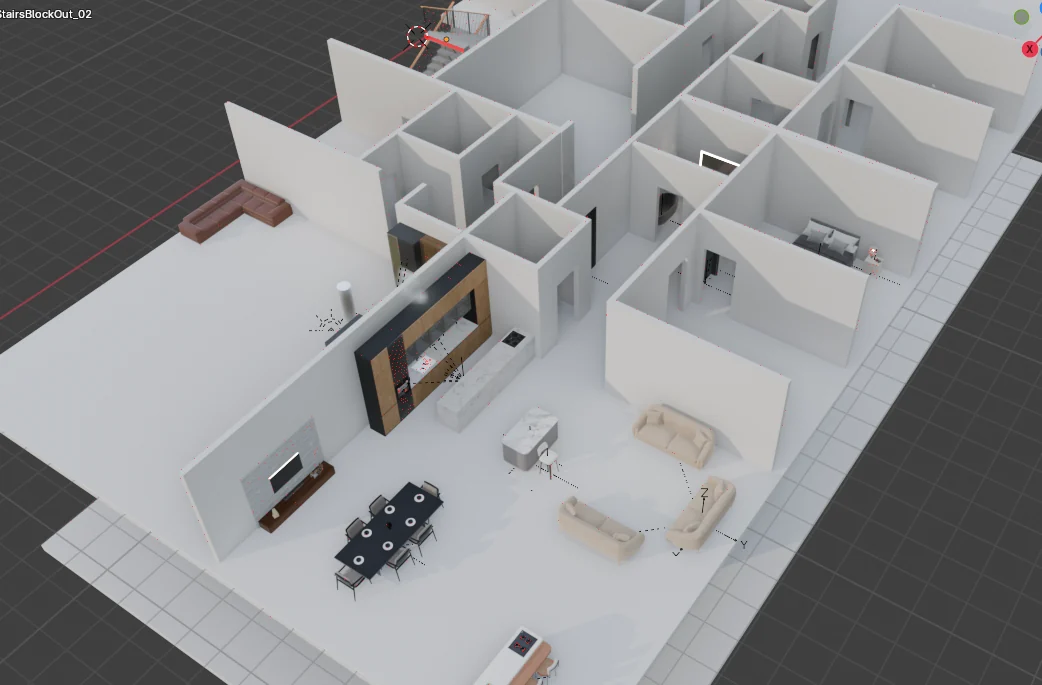
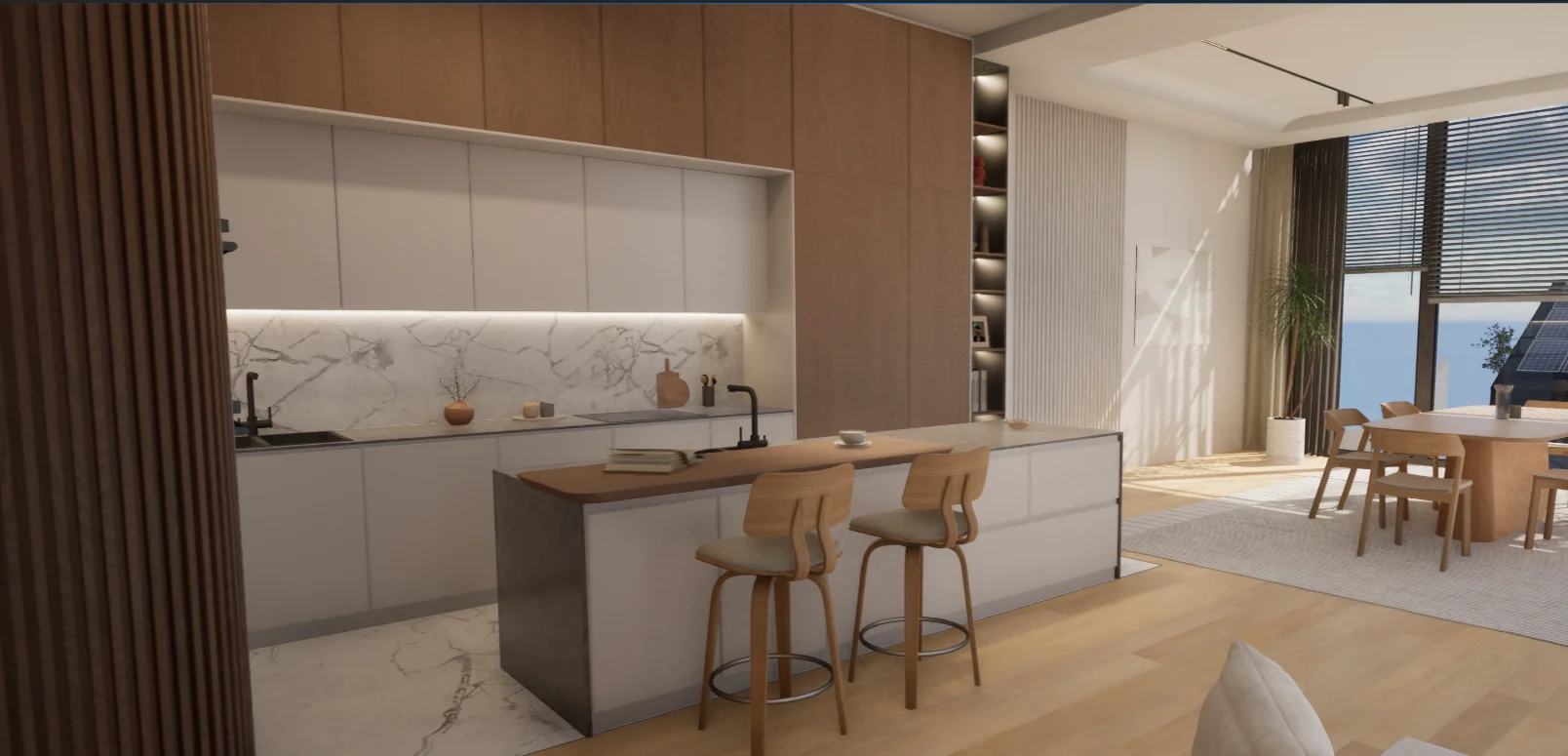
A blockout is the first walkable version of a project: walls, openings, heights and stairs, without final materials. It answers the expensive questions early — does the layout work, are the dimensions right, does the view from the terrace match the plans — before anyone spends weeks on textures and lighting. In our process the client receives a walkable blockout link within days and approves the dimensions before final production starts.
AI in the 3D editor: a rough blockout, very fast
We connect an AI assistant directly to our 3D editor. It can build and change objects in the scene and check what it made from the viewport.
That is enough for AI to put together a first blockout from the plans in a fraction of the usual time: walls, floor slabs, openings, repeating floors. The result is a draft — not precise, not finished. What it gives us is the overall volumes and dimensions almost immediately.
From there the work is human. An artist checks every wall and opening against the drawings, corrects what is off and brings the model to the accuracy the project needs. The time saved is the hours of manual modelling between the plans and the first version you can walk through.
Into Unreal Engine
The checked blockout goes to Unreal Engine, where it becomes interactive: collisions, a walking camera, basic light. It is streamed to the browser like the final digital twin, so the client tests it exactly as buyers will. Approved dimensions become the base for production — materials, lighting and interaction.
A second level: AI video
Sometimes a project needs video before it needs an interactive digital twin — for a launch, a landing page or social media. Here the blockout pays off a second time.
- Cameras. In the blockout we set up every camera: the approach to the building, the walk into the living room, the view from the terrace.
- Storyboard. Those cameras become a storyboard — a sequence of frames with the right composition and the real proportions of the project.
- Generation. The storyboard frames go into an AI video model, which turns images into short multi-shot video clips. Reference images help keep the setting and style consistent from shot to shot.
The result is a presentation video assembled far faster and more simply than a traditional video production, where every shot has to be fully modelled, textured, lit and rendered frame by frame. Because the cameras come from the real blockout, the framing and proportions follow the project.
Where AI stops
AI speeds up the routine; people own the result. Every asset is checked and finished by an artist and signed off by a senior lead. And if a client’s brand or contract rules out AI, we deliver the whole project without it — it simply takes a little longer. More about this on our Technology page.